Lucilius Press › Reading guides
Seneca's On Anger in modern English
On Anger, in Latin De Ira, is a three-book essay Seneca wrote for his brother Novatus. Book One asks what anger is and argues it is never useful. Book Two asks whether it can be avoided. Book Three gives practical ways to stop it in yourself and calm it in others. It is one of the most practical things Seneca wrote.
English versions
Robert A. Kaster's translation, in Anger, Mercy, Revenge (University of Chicago Press, 2010), is a modern scholarly version.
The Lucilius Press edition
Seneca: How to Stop Being Angry is a modern plain-English translation of On Anger, with an introduction. Here is how Seneca begins.
You demanded of me, Novatus, that I write on how anger can be softened, and I think you were right to fear this passion above all others, the foulest and most rabid of them all. The others have some quiet and calm in them; this one is all agitation, all attack, raging with a craving for pain and weapons and blood and torture, a craving with nothing human in it, careless of itself so long as it hurts another, hurling itself onto the very spear points, greedy for a revenge that drags the avenger down with it.
Certain wise men have therefore called anger a brief madness. It is just as powerless over itself, forgetful of decency, blind to its own ties, locked onto whatever it has begun, stubborn and intent, closed to reason and to counsel, stirred up by empty causes, unfit to make out the just and the true: very like a falling building that breaks apart on the very thing it crushes.
From Seneca: How to Stop Being Angry, translated by Daniel Wexley, Lucilius Press. On Anger, Book 1, chapter 1. Free sample, reproduced from the book.
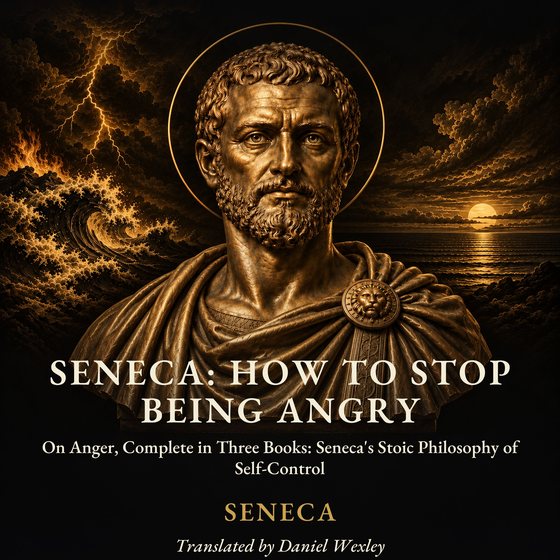
Seneca: How to Stop Being Angry
Translated by Daniel Wexley