Lucilius Press › Reading guides
Epictetus' Enchiridion (the Handbook), summarized
The Enchiridion, or Handbook, is a short manual of Epictetus' teaching put together by his student Arrian, in about fifty brief chapters. Its core idea is in the first line: some things are up to us, like our judgments and choices, and some are not, like our bodies, property and reputation. Peace comes from caring only about the first kind.
The main lessons
What is up to you. Your opinions, desires and choices. Everything else is on loan.
Judgments, not things. We are upset not by what happens but by what we think about it.
Want what happens. Do not wish for things to go your way. Wish for them to go as they go.
Loss. Never say you have lost something. Say you have given it back.
Roles. You are an actor in a play written by someone else. Play your part well.
Practice. Philosophy is something you do, not something you talk about.
Translations
Robin Hard's Oxford World's Classics volume (2014) is a modern translation of the Discourses, Fragments and Handbook together.
The Lucilius Press edition of Epictetus: The Stoic Handbook and Discourses is a modern plain-English translation of the Handbook, the four surviving books of the Discourses and the fragments, with short introductions and a glossary. Here is the Handbook's first chapter.
1. Of all the things there are, some are up to us and some are not. Up to us are our opinions, our impulses, our desires, our aversions, in short, everything that is our own doing. Not up to us are the body, property, reputation, public office, in short, everything that is not our own doing.
The things up to us are by nature free, unhindered, unobstructed; the things not up to us are weak, slavish, open to obstruction, and belong to others.
Remember, then, that if you take what is naturally slavish to be free, and what belongs to others to be your own, you will be blocked at every turn, you will grieve, you will be thrown into confusion, you will blame both gods and men. But if you take only what is yours to be yours, and what belongs to another to be, as it really is, another’s, then no one will ever force you, no one will hinder you, you will blame no one, accuse no one, you will not do a single thing against your will, you will have no enemy, no one will harm you, because nothing that can harm you will be able to reach you.
From Epictetus: The Stoic Handbook and Discourses, translated by Owen Halloway, Lucilius Press. Enchiridion 1. Free sample, reproduced from the book.
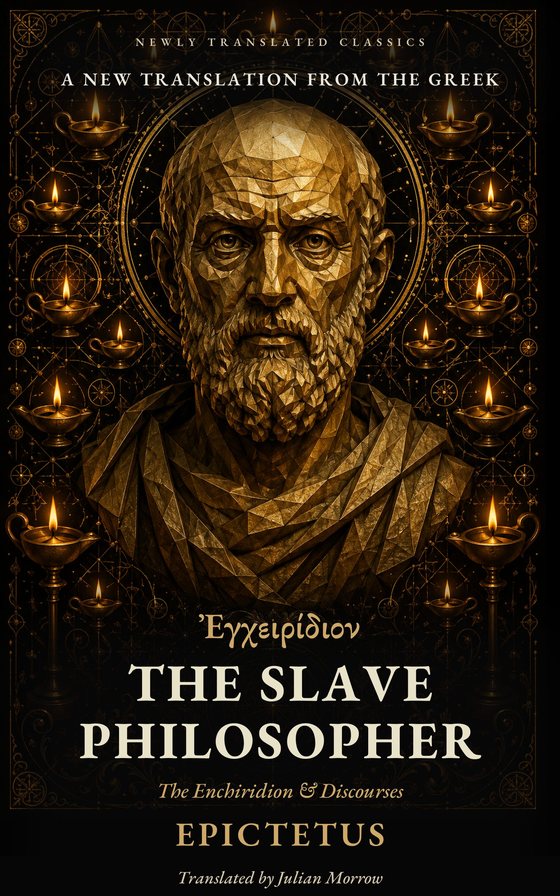
Epictetus: The Stoic Handbook and Discourses
Translated by Owen Halloway