Lucilius Press › Reading guides
What is Meditations about? A plain summary
Meditations is a private notebook. Marcus Aurelius, Roman emperor from 161 to 180 AD, wrote short reminders to himself, in Greek, much of it, it seems, during long military campaigns. He was not writing for readers. The notes keep returning to a few themes: do your duty, be patient with difficult people, life is short, and your mind is the one thing that is truly yours.
How the book is laid out
There are twelve books, but there is no plot and no argument running from start to finish. Book One is a list of thanks to the people who shaped him. After that, the entries range from a single line to a page or two.
The themes
Get up and do your work. He scolds himself for wanting to stay in bed.
Other people. Expect to meet rude, ungrateful people, and do not be angry, because they are kin to you and act out of ignorance.
What is in your control. Things outside cannot touch the mind. Our judgments about them are what disturb us.
Impermanence. Great men, whole cities and fame itself pass away quickly.
Nature and reason. Live in line with nature and with the reason we share with everyone.
The Lucilius Press edition
Meditations is a modern plain-English translation of all twelve books. Here is the famous entry that opens Book Five.
1. When you have trouble getting up in the morning, have this thought ready: “I am getting up to do the work of a human being.” So am I going to complain, if I am setting out to do what I came into the world for, and what I was put here to do? Or was I made for this, to lie under the blankets and warm myself? “But this is more pleasant.” Were you brought into existence for pleasure, then? In general, for feeling, and not for getting things done?
From Meditations, translated by Owen Halloway, Lucilius Press. Book Five, section 1. Free sample, reproduced from the book.
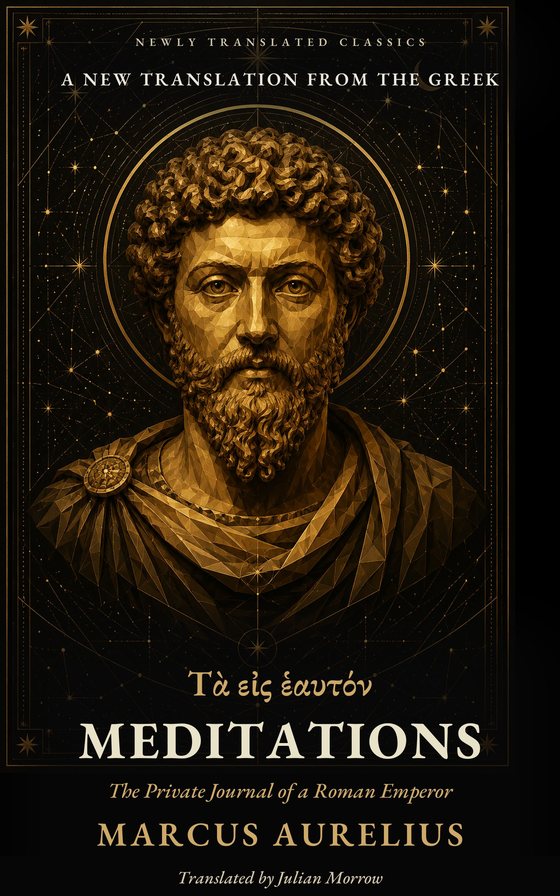
Meditations
Translated by Owen Halloway