Newly Translated Classics
Complete, faithful, fresh translations. Never abridgments, never modernized Victorian English. Forthcoming volumes close out the shelf.
Audiobook $9.99
Poetics
The earliest surviving work of literary theory in the Western tradition, translated fresh from the Greek into clear, modern English.
View Book →
Audiobook $12.99
Meditations
The private notebook of a Roman emperor, notes to himself, never meant for us. A complete new translation from the Greek that sounds the way it felt to write.
View Book →
Audiobook $9.99
Epicurus: The Philosopher of the Garden
Everything that survives of the most slandered philosopher in history: the letters, the doctrines, the fragments. Pleasure, it turns out, meant something quieter than you've heard.
View Book →
Audiobook $16.99
Epictetus: The Stoic Handbook and Discourses
Born a slave, he taught emperors. The blunt classroom voice of Stoicism's greatest teacher, the complete Enchiridion and Discourses, fresh from the Greek.
View Book →
Audiobook $9.99
Musonius Rufus: The Roman Socrates
The teacher of Epictetus, exiled three times for philosophy. His surviving lectures are Stoicism at its most practical: food, family, exile, and how to live with both hands.
View Book →
Audiobook $14.99
Plato's Defense of Socrates
Charged with corrupting the young and dishonoring the gods, Socrates chose death over abandoning the examined life. Plato's four dialogues on the trial and death of the West's first philosopher, Euthyphro, Apology, Crito, Phaedo, fresh from the Greek.
View Book →
Audiobook $16.99
Epicurus & the Epicureans
How to live without fear. A clear, quote-driven introduction to the most misunderstood school of ancient thought, from Epicurus's Garden to Lucretius's Rome, and what it still offers anyone trying to live well now.
View Book →
Audiobook $16.99
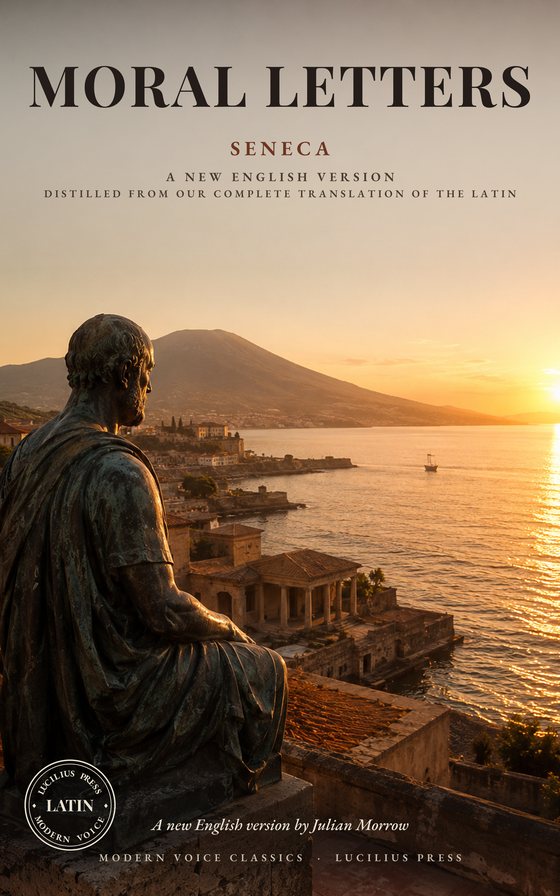
Seneca's Moral Letters to Lucilius
All 124 letters, the greatest correspondence course in how to live ever written. Time, death, friendship, anger, wealth, the steadiness of the mind: the warmest and most quotable book in Stoicism, complete and fresh from the Latin.
View Book →
Audiobook $14.99
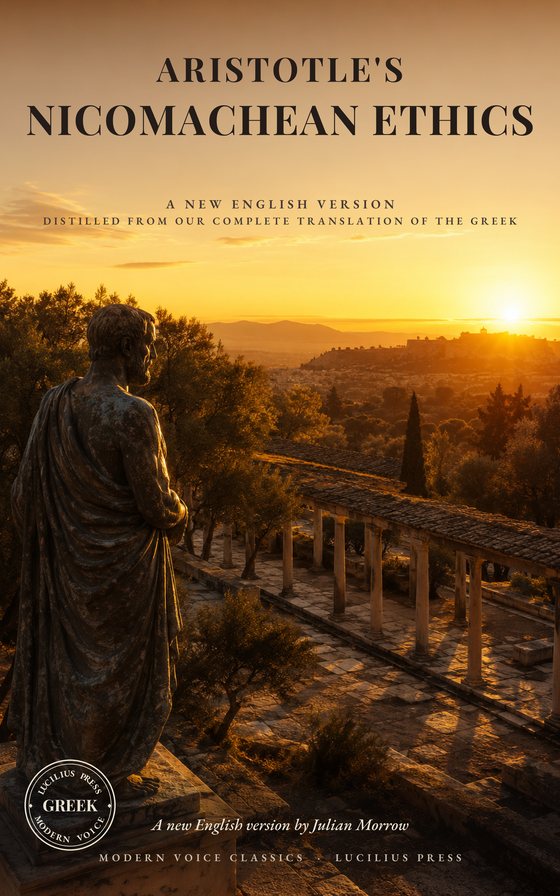
Nicomachean Ethics
The foundational book on how to live well, what happiness actually is, why character is built by habit, and how a good life is assembled choice by choice. Aristotle's masterwork, complete and fresh from the Greek in clear modern English.
View Book →
Audiobook $14.99
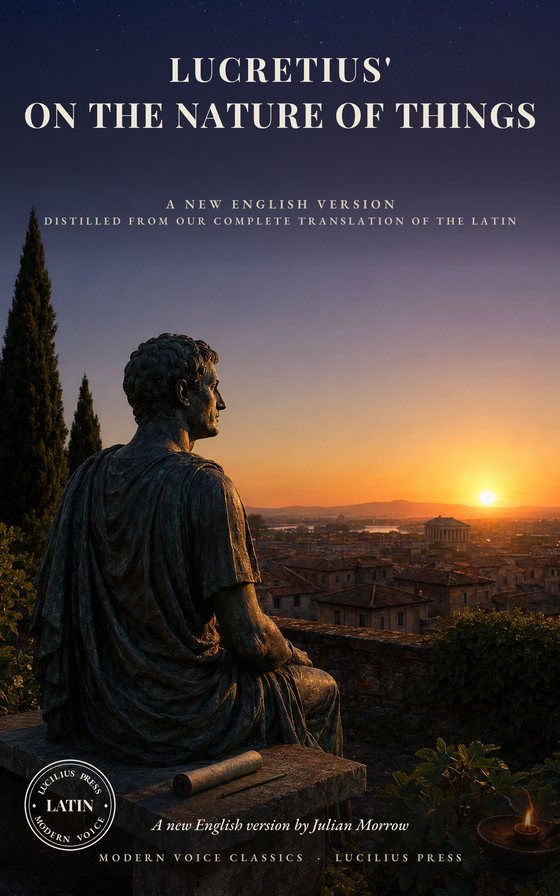
Lucretius' On the Nature of Things
A poem two thousand years old that already knew the universe was atoms and empty space, the mind mortal, and the fear of death the one thing worth curing. Lucretius's epic of science and serenity, in a new verse translation from the Latin.
View Book →
Audiobook $16.99
Confessions
The first true autobiography ever written: a restless, brilliant man arguing with God and with himself about desire, memory, time, and what he was made for. Complete and fresh from the Latin.
View Book →
Audiobook $14.99
Xenophon: Socrates
The other eyewitness. Before Plato turned him into a legend, Xenophon knew Socrates as a friend, and remembered a plainer, shrewder, more useful teacher. Memorabilia, Apology, and Symposium, fresh from the Greek.
View Book →
Audiobook $9.99
Theophrastus' Characters
Thirty comic sketches of people you already know: the flatterer, the cheapskate, the man who will not stop talking. Aristotle's successor invented the character study, and it is still funny. Fresh from the Greek.
View Book →
Audiobook $14.99
Seneca's Moral Essays
Five of Seneca's greatest essays, including On the Shortness of Life, the most famous twenty minutes in Stoic philosophy. Anger, grief, providence, mercy, and time, addressed to real people inside Nero's Rome. Complete and fresh from the Latin.
View Book →
Audiobook $12.99
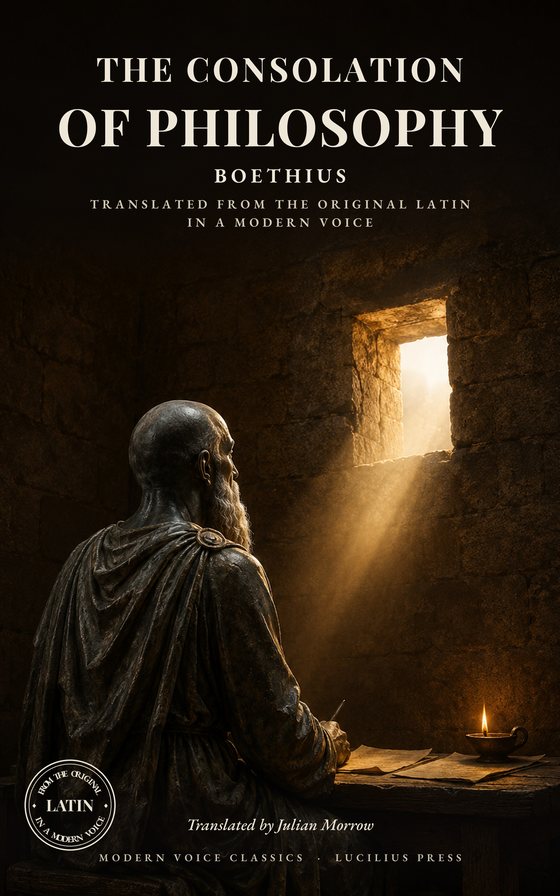
Boethius' Consolation of Philosophy
The greatest book ever written in a prison cell. Condemned to death on a false charge, a Roman statesman is visited by Philosophy herself, who argues him back from despair, through fortune, happiness, the problem of evil, and free will. Complete and fresh from the Latin, the prose and all thirty-nine poems.
View Book →
Audiobook $14.99
Cicero's Tusculan Disputations
The calmest book ever written about grief and death, by a man drowning in both. Cicero's five afternoons on how to face death, pain, grief, and fear, the Roman root of Stoic consolation, fresh from the Latin.
View Book →
Audiobook $12.99
The Early Stoics: Zeno, Cleanthes and Chrysippus
The founders of Stoicism wrote a library, and almost none of it survives. The complete Lives of Zeno, Cleanthes, and Chrysippus, the one hymn that lived whole, and the best of the scattered fragments, gathered and freshly translated into one readable book.
View Book →
Audiobook $9.99
The Cynics: Diogenes, Crates and Hipparchia
The most quotable philosophers of the ancient world wrote almost nothing that survives, they left the stories instead. The complete Book VI lives of the Cynics, freshly translated from the Greek: the jar, the lamp, the coinage, and the four people who turned shamelessness into a discipline.
View Book →
Audiobook $9.99
Heraclitus: Fragments of Fire
Everything that survives of Heraclitus, the river, the fire, the hidden order of things, translated fresh from the Greek.
View Book →
Audiobook $9.99
Democritus: On Cheerfulness
The surviving fragments of the laughing philosopher: atoms, chance, and how to stay cheerful in a hard world, fresh from the Greek.
View Book →
Audiobook $14.99
Porphyry's On Abstinence
Porphyry's four-book case against eating animals, the ancient world's most complete argument for a bloodless table, translated fresh from the Greek.
View Book →
Audiobook $16.99
Plotinus' Enneads
All fifty-four treatises, arranged by his student Porphyry, the ascent from body to soul to Intellect to the One that shaped a thousand years of mystics after him. The complete Enneads, fresh from the Greek.
View Book →
Audiobook $9.99
Porphyry: Pathways to the Intelligible
Forty-four compressed sentences: Plotinus's student boiling his teacher's system down to what a reader can actually carry. The shortest way into Neoplatonism, fresh from the Greek.
View Book →
Audiobook $14.99
Plutarch's On Peace of Mind
The Greek biographer of Caesar and Alexander on how to keep your calm in a life you don't fully control, envy, grief, debt, and exile, and what to do about each.
View Book →
Audiobook $9.99
Seneca's Apocolocyntosis
The emperor who exiled him is dead and being made a god. Seneca writes the scene where the gods refuse to let him in.
View Book →
Audiobook $14.99
Cicero's On Duties
Cicero's last book, written to his son a year before he was murdered: what you owe other people when it costs you.
View Book →
Audiobook $12.99
The Book of Ancient Maxims: Pythagoras, Solon, Cato and Publilius Syrus
The distilled common sense of antiquity, one line at a time — the Golden Verses of Pythagoras, the Delphic maxims, Cato's Distichs, and the Sentences of Publilius Syrus, gathered in one volume.
View Book →
Audiobook $12.99
After the Garden: Philodemus and Diogenes of Oenoanda
Epicurus' followers three centuries on: one buried by Vesuvius, one carved into a public wall for strangers to read.
View Book →
Audiobook $16.99
Diogenes Laertius: Lives of the Eminent Philosophers
Almost everything we know about the ancient philosophers comes from one compiler, and he is the writer scholars trust least. All ten books, complete.
View Book →
Audiobook coming soon
Cicero's On Old Age and Friendship
Two dialogues Cicero wrote near the end, one on growing old without dreading it, one on what a real friendship costs and is worth. Complete and fresh from the Latin.
View Book →
Audiobook coming soon
Cicero's On the Republic and On the Laws
Cicero on how a republic should be built: the best constitution, law rooted in nature, and the Dream of Scipio. Both works complete, in a new translation from the Latin.
View Book →
Audiobook $9.99
The Poem of the Cosmos: Xenophanes, Parmenides, Empedocles and Anaxagoras
Philosophy before it had prose: every surviving fragment of Xenophanes, Parmenides, Empedocles and Anaxagoras, translated fresh from the Greek, with the ancient life of each man.
View Book →
Audiobook coming soon
Aristotle's Politics
Aristotle's foundational inquiry into citizenship, constitutions, and the shared life of a city, translated fresh from the Greek into clear modern English.
View Book →
Audiobook $14.99
Outlines of Pyrrhonism
Sextus Empiricus' practical guide to Pyrrhonian skepticism: test opposed arguments, suspend judgment when neither wins, and find the tranquility that follows.
View Book →
Audiobook $9.99
On the Incarnation
Why did God become human? Athanasius' foundational argument traces creation, corruption, incarnation, cross, resurrection, and participation in the life of God—newly translated from the Greek.
View Book →
Audiobook $12.99
Symposium and Other Dialogues
Four complete Socratic dialogues, newly translated from the Greek: Gorgias on rhetoric and power, Protagoras on virtue, Meno on inquiry, and Symposium on love.
View Book →
Audiobook coming soon
Isocrates' Panegyricus
Greece was tearing itself apart. Isocrates proposed a solution as visionary as it was dangerous: unite the Greeks by sending them to conquer Persia.
View Book →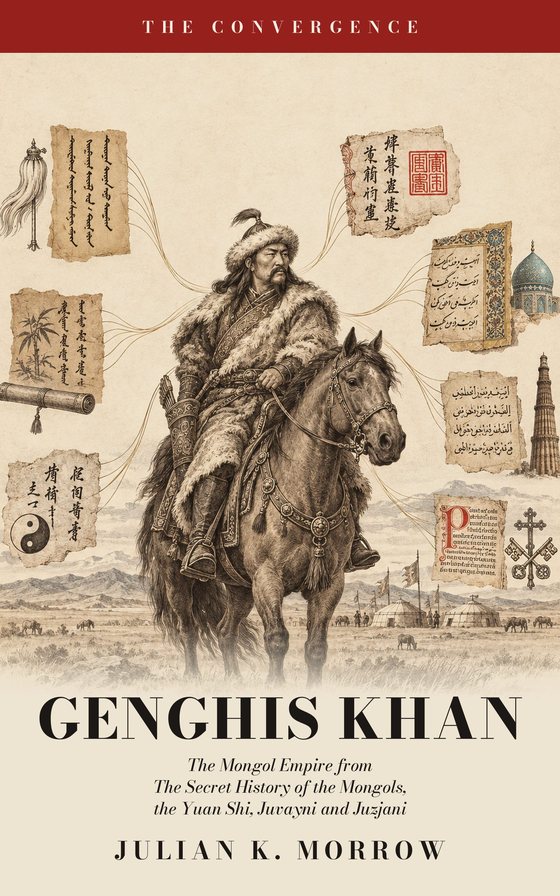
Audiobook $14.99
Genghis Khan
A continuous modern-English life of Temujin, from an abandoned household on the steppe to the making of the Mongol Empire, woven from Lucilius Press's own translations of the Secret History, the Yuan Shi, Juvayni and Juzjani. Volume 2 of THE CONVERGENCE.
View Book →
Audiobook coming soon
Cicero: Philosophical Essays on Fate and Divination
Can the future be known, or do we mistake coincidence, custom, and fear for messages from the gods? Cicero puts prophecy and fate on trial.
View Book →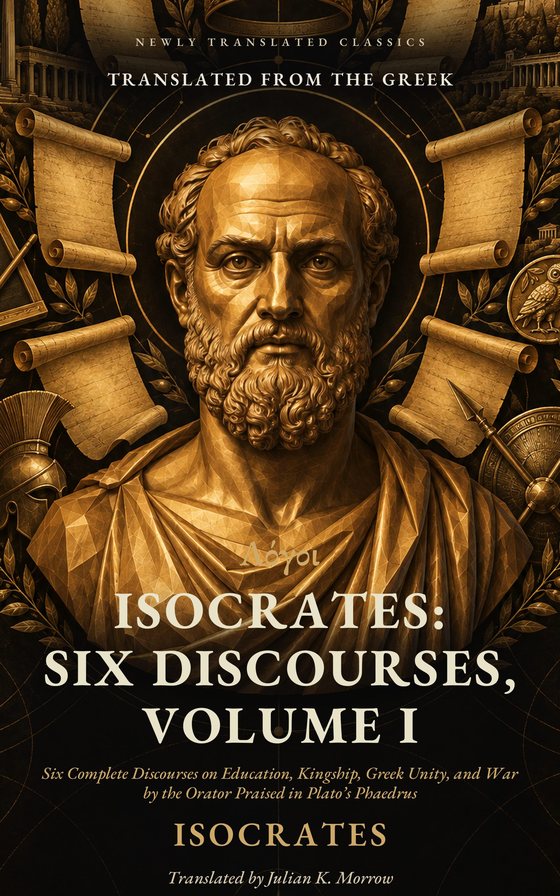
Audiobook coming soon
Isocrates: Six Discourses, Volume I
Can education create a just ruler, and can Greek unity be achieved without sacrificing freedom? Six complete discourses on power, character, and command.
View Book →
Audiobook coming soon
Plutarch's Moralia: On Moral Virtue
Virtue does not begin when feeling disappears. Plutarch on training reason and emotion to work together, not against each other.
View Book →
Audiobook coming soon
Plutarch's Advice About Keeping Well
Health is not the highest good — but Plutarch's practical rules for guarding it still hold up.
View Book →
Audiobook coming soon
The Secret History of the Mongols
Before Genghis Khan founded an empire, he was a hunted young man hiding in a river. The origin story told from inside the world that made him.
View Book →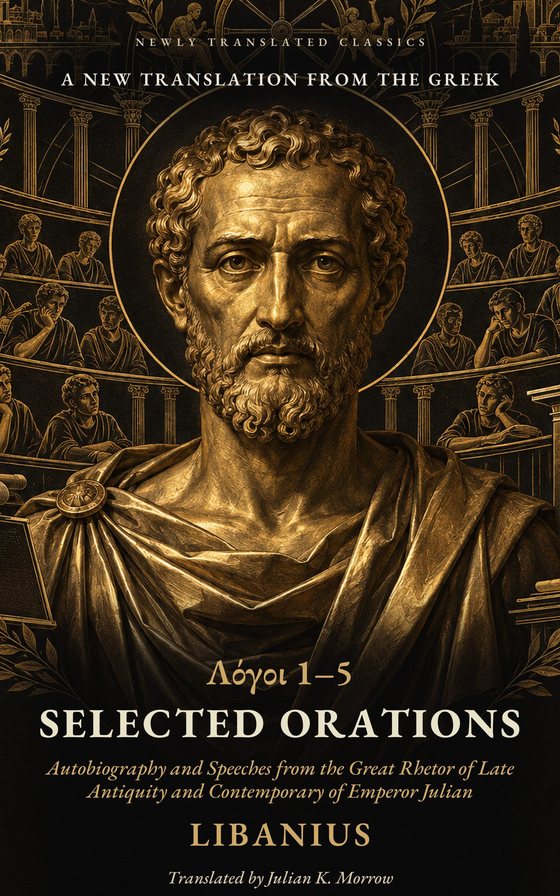
Audiobook coming soon
Selected Orations
A celebrated teacher takes the witness stand to argue the hardest case of his career: the meaning of his own life.
View Book →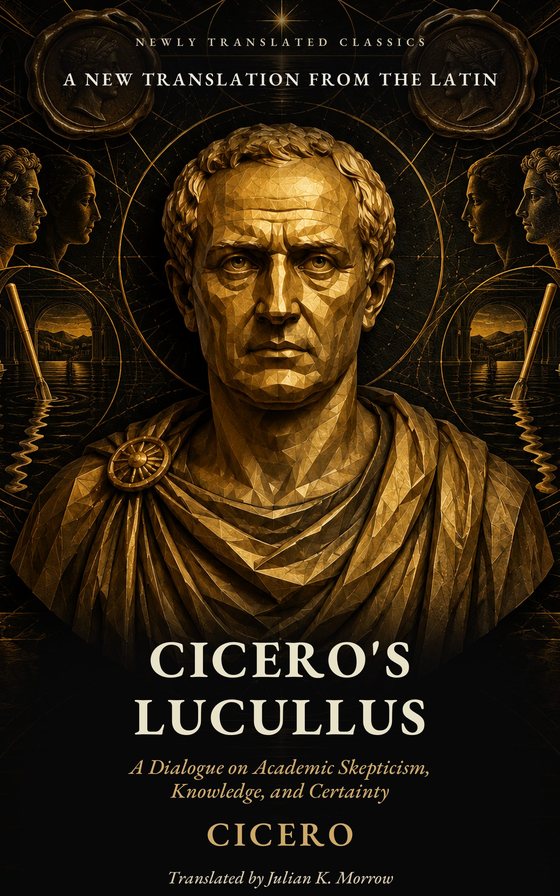
Audiobook coming soon
Cicero's Lucullus
How can you know that what seems true is not merely convincing? Cicero's case for and against the possibility of certain knowledge.
View Book →
Audiobook coming soon
Lives of Fabius Maximus and Marcellus
One was Rome's shield, the other its sword. Together they reveal how Rome survived Hannibal.
View Book →